

Hey there! As a supplier of processed mirrors, I often get asked a bunch of questions, and one that pops up quite frequently is, "Do processed mirrors resist scratches?" Well, let's dive right into this topic and find out the ins and outs of scratch resistance in processed mirrors.
First off, let's understand what processed mirrors are. Processed mirrors go through various treatments and finishes to enhance their functionality and appearance. They're not your ordinary mirrors. We've got different types like Tempered Glass Bathroom Mirror, Frameless Mirror In Bathroom, Oval Bathroom Mirror, Oval Beveled Bathroom Mirror, and Teardrop Bathroom Mirror. Each type has its own unique features and benefits.
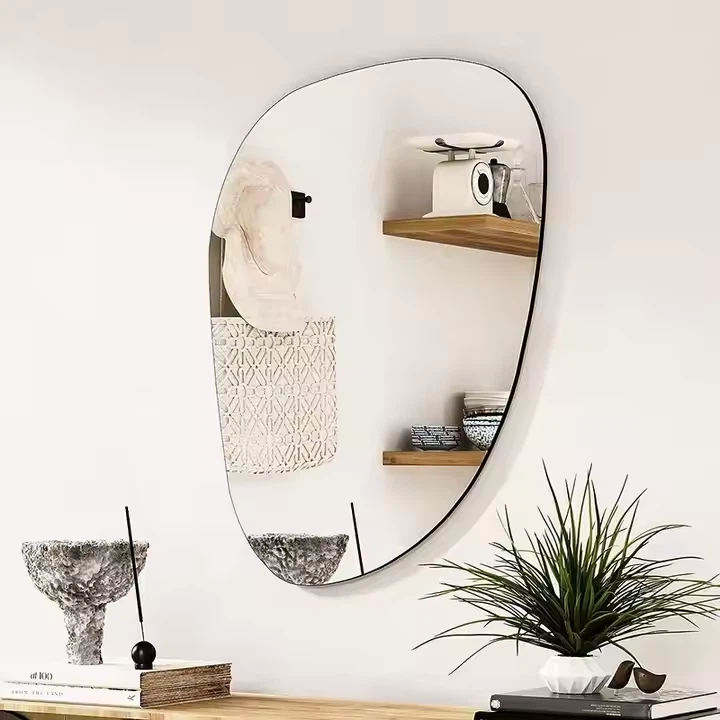

Now, let's talk about scratch resistance. The ability of a processed mirror to resist scratches depends on several factors. One of the key factors is the type of glass used. High - quality glass is generally more scratch - resistant. For instance, tempered glass, which is commonly used in Tempered Glass Bathroom Mirror, is known for its strength. It goes through a special heating and cooling process that makes it up to four times stronger than regular glass. This means it can withstand more wear and tear, including scratches from everyday use.
Another factor is the coating applied to the mirror. Some processed mirrors come with anti - scratch coatings. These coatings act as a protective layer on the surface of the mirror. They're designed to absorb the impact of minor scratches and prevent them from reaching the glass itself. For example, in bathrooms where there might be a lot of moisture and the risk of objects accidentally hitting the mirror, an anti - scratch coating can be a real lifesaver. It helps to keep the mirror looking new for a longer time.
But it's important to note that no mirror is completely scratch - proof. Even the most scratch - resistant processed mirrors can get scratched under certain circumstances. If you use abrasive cleaners or rough materials to clean the mirror, you're likely to cause scratches. For example, using a scouring pad or a cleaner with harsh chemicals can damage the surface of the mirror, regardless of its scratch resistance. So, proper cleaning and maintenance are crucial to preserve the scratch - resistant properties of your processed mirror.
Let's take a closer look at some of the specific types of processed mirrors and their scratch resistance.
Tempered Glass Bathroom Mirrors
As mentioned earlier, tempered glass is strong. In a Tempered Glass Bathroom Mirror, the tempered glass provides a good level of scratch resistance. It can handle the normal bumps and scrapes that might occur in a bathroom environment. However, if you drop a sharp object directly on the mirror, it could still cause a scratch or even break the mirror. But compared to regular glass mirrors, it's much more durable.
Frameless Mirrors in Bathrooms
Frameless Mirror In Bathroom gives a sleek and modern look. The scratch resistance of these mirrors depends on the quality of the glass and any coatings. Since they're frameless, they're more exposed, so it's even more important to have a good scratch - resistant surface. A high - quality frameless mirror with an anti - scratch coating can maintain its pristine appearance for a long time.
Oval Bathroom Mirrors
Oval Bathroom Mirror adds a touch of elegance to any bathroom. These mirrors often have a smooth surface, and if they're made with scratch - resistant glass and coatings, they can resist scratches well. However, because of their oval shape, they might be a bit more difficult to clean without causing scratches if not done properly. So, using a soft microfiber cloth and a gentle cleaner is recommended.
Oval Beveled Bathroom Mirrors
The Oval Beveled Bathroom Mirror has a unique beveled edge, which adds a decorative touch. The beveled part can be a bit more delicate, but overall, the scratch resistance depends on the glass and coating quality. The beveled edge might be more prone to chipping or scratching if it's not handled carefully.
Teardrop Bathroom Mirrors
Teardrop Bathroom Mirror has an interesting shape. Similar to other processed mirrors, its scratch resistance is determined by the glass and any protective coatings. The unique shape can make it a focal point in the bathroom, but it's important to protect it from scratches to keep it looking great.
So, how can you tell if a processed mirror is scratch - resistant? Well, when you're looking to buy a mirror, ask the supplier about the type of glass used and if there's an anti - scratch coating. Reputable suppliers should be able to provide you with detailed information about the mirror's features and its scratch - resistant properties.
In addition to the glass and coating, the thickness of the mirror can also play a role in scratch resistance. Thicker mirrors are generally more durable and less likely to get scratched. However, they can also be heavier and more expensive.
If you're in the market for a processed mirror, it's important to consider your specific needs. If you have a busy household or a high - traffic area like a public bathroom, you might want to opt for a more scratch - resistant mirror. On the other hand, if it's for a less - used area, you might have more flexibility in your choice.
As a processed mirror supplier, I can assure you that we take great care in selecting the materials and applying the coatings to ensure the best possible scratch resistance. We understand that our customers want mirrors that not only look good but also last a long time.
If you're interested in purchasing processed mirrors for your project, whether it's for a residential bathroom or a commercial space, I'd love to have a chat with you. We can discuss your specific requirements, the different types of mirrors available, and find the perfect solution for you. Don't hesitate to reach out and start the conversation about your mirror needs.
References
- Glass Association of North America. (2023). Understanding Glass Properties.
- National Building Museum. (2023). The Science of Mirrors.


